Friday, July 22, 2022
How Do Educators in General Education Classrooms Provide an Effective Education for Children with ASD (Autism Spectrum Disorder)?
"Many children with autism are spoken to as if they do not understand what others are talking about. Treat them, as you would want to be treated. Children with autism understand a lot more than we give them credit for"(Heward et al., 2017, pg. 224). This quote from Mark Mautone, a teacher of young children with ASD, is an important reminder to any teacher that has the opportunity to work with a child on the spectrum.
Though general education teachers do not teach specifically to students with autism, here are three simple ways they can adjust their classrooms to best meet the needs of a student with ASD:
1. Teachers should stick to a consistent routine. "Many children with autism are inflexible with routines"(Heward et al., 2017, pg. 224). Since children can oftentimes struggle with inconsistencies in schedules, it is important to have a daily, visual schedule displayed in the classroom. Ideally, pictures would be incldued that match routine for the day. This schedule should be reviewed and referred to each school day. Something as simple as this can help to prevent "explosive meltdowns in some children [with ASD]"(Heward et al., 2017, pg. 224).
2. Encourage and include their obsessions into daily learning. Oftentimes, children with ASD "talk incenssantly about one topic" (Heward et al., 2017, pg. 224). Whether this topic happens to be cooking, baseball cards, or Barbies, teachers can use these interests to their advantage. For instance, if teaching a lesson on sequencing in sentences, allow the student with autism to incoroporate their Barbie into the lesson. Have the child practice using sequencing words to physically get the Barbie dressed. They could then be able to transfer that experience to sentence sequencing activity on paper.
3. Provide access to social stories in the classroom. Social stories are a great way to help diffuse challenges that may arise for a student with ASD. These stories have simple sentences on each page and a picture to match. They might show steps for sharing a toy with a peer, or waiting in line in the cafeteria during lunch time. Reading these stories "before an event or activity can decrease a child's anxiety, improve [his or her] behavior and help [them] to understand the event from others' perspectives" (Heward et al., 2017, pg. 241).
"Children with autism understand a lot more than we give them credit for" so long as general educators will use tools, such as the ones listed above to help include students in their classroom with ASD (Heward et al., 2017, pg. 224).
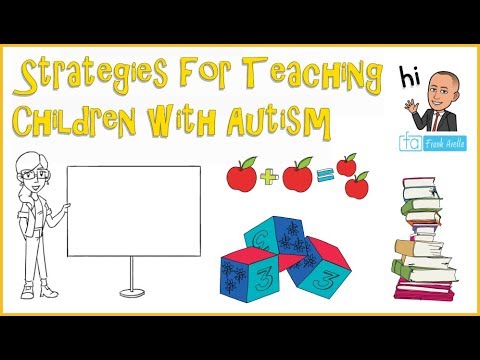
Check out this video below that shares some more great tips to use in the classroom with students on the spectrum!
References
Heward, W. L., Alber Sheila René, Konrad, M. (2017). Chapter 7 Autism Spectrum Disorder. In Exceptional children: An introduction to special education (11th ed.). essay, Pearson.
Teachings in Education. (2019, March 6). Teaching children with Autism. YouTube. Retrieved July 22, 2022, from https://www.youtube.com/watch?v=cnWQWa7U29s

Subscribe to:
Comments (Atom)
How Do Educators in General Education Classrooms Provide an Effective Education for Children with ASD (Autism Spectrum Disorder)?
"Many children with autism are spoken to as if they do not understand what others are talking about. Treat them, as you would want to b...
-
"Many children with autism are spoken to as if they do not understand what others are talking about. Treat them, as you would want to b...
